
U Bolt and V Bolt
About The Product
U Bolts and V Bolts are mechanical fasteners used primarily for clamping or anchoring cylindrical objects such as pipes, tubes, and poles. Shaped like the letters “U” and “V” respectively, they come with threaded arms that allow secure fastening using nuts and washers. They are commonly used in electrical, mechanical, construction, automotive, and marine industries.
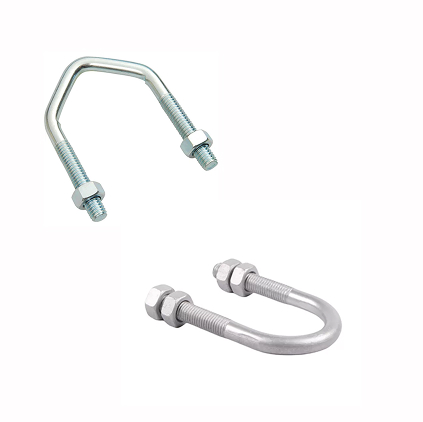
featueres
usage
1. Clamping: Used to clamp pipes or tubing to a supporting surface.
2. Support: Provide structural support to piping systems.
3. Securing: Fasten poles, conduit, cables, or rods.
4. Electrical: Commonly used to fix earthing rods, electrical conduits or poles.
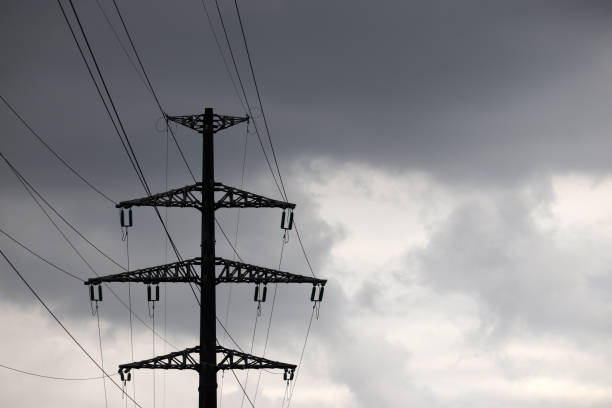
size and range
U Bolt
1. Pipe Size Range: ½” to 24” (or more for custom jobs)
2. Rod Diameter: M6 to M30 (or 1/4" to 1-1/4")
3. Length (leg length): Customized based on installation
4 Bend Radius: Depends on pipe OD
V Bolt
1. Often custom-fabricated based on application.
2. Angle: 60°, 90°, or custom
3. Rod Diameter: M8–M24 standard range
4. Leg Length & Width: As per clamping requirement
standardization
1. DIN 3570 – U-bolts for round steel pipes
2. ASTM A307 / A193 – For material and thread specification
3. ISO 898 – Mechanical properties for bolts/nuts
4. IS 1367 – Indian standard for fasteners
5. BS EN 10025 – Structural steel specification
aPPLICATION
Electrical:
1.Fixing earthing pipes/rods
2. Supporting conduit runs or trunking
3. Transmission pole accessories
4. Holding insulators or busbars
Mechanical/Industrial:
1. Pipe suspension or support
2. Exhaust system assembly (automotive)
3. Mounting motors or pumps
4. HVAC ductwork clamping
Construction:
1. Scaffolding
2. Pipe bridges and hangers
3. Mounting structures on steel beams
INSTALLATION
➥Place the U or V bolt around the pipe, pole or object.
➥ Insert the threaded ends through holes on a bracket or support plate.
➥Place washers and nuts on both ends.
➥ Tighten evenly using a torque wrench to avoid misalignment or overtightening.
➥ Check for vibration loosening if in a dynamic system.