
MID-SPAN JOINTS
About The Product
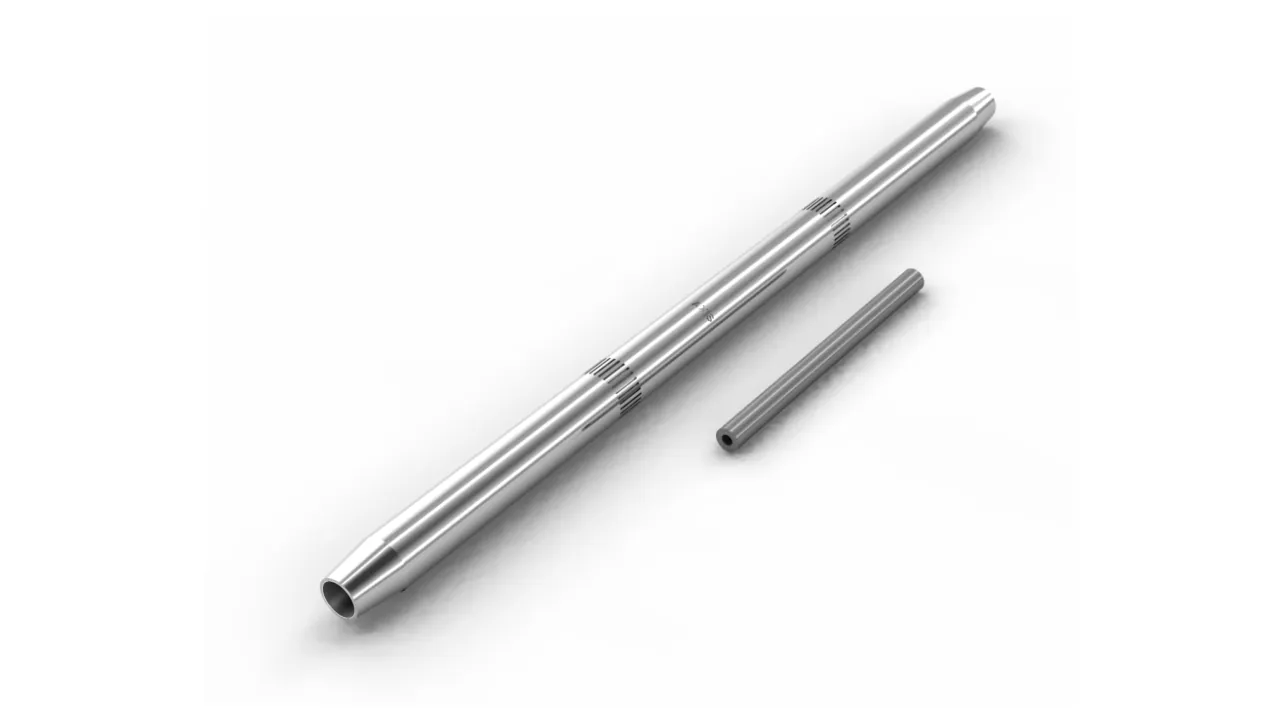
A Mid-Span Joint (also known as a splice joint or straight-through joint) is a type of connector or joint used to join two electrical conductors at a point along their length — not at the ends. It is typically used in overhead and underground transmission and distribution lines where the cable needs to be extended or repaired.
Mid-span joints are critical components in maintaining the continuity of electrical conductors and ensuring minimal loss, mechanical strength, and electrical conductivity at the joint.
featueres
1.Electrical Continuity: Maintains efficient electrical conductivity across the joint.
2. Mechanical Strength: Designed to match or exceed the mechanical strength of the conductor itself.
3. Corrosion Resistant: Often made of materials like aluminum or copper with anti-corrosive coating.
4. Insulation Compatible: Can be used with heat-shrink or cold-shrink sleeves for proper insulation.
5. Sealing: Water- and dust-proof to protect from environmental damage, especially in underground use.
6. Low Resistance: Designed to keep electrical resistance at the joint as low as possible.
7. Easy Installation: Comes with design features for fast and secure installation in the field.
usage
1. Joining Conductors: To connect two segments of an electrical conductor in mid-span without interrupting the line.
2. Cable Extension: For extending the length of power cables or conductors.
3. Repair: Used in case of damaged or broken cables that require section replacement.
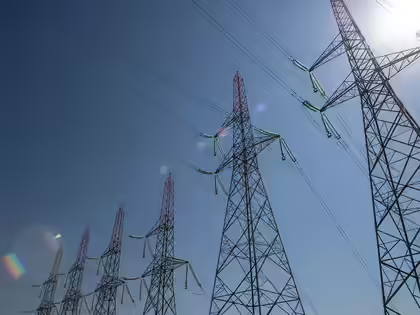
4. Transmission Lines: Especially in overhead or underground power distribution networks.
5. Utility Maintenance: Essential for maintenance work where partial lengths of the cable are replaced.
Size and Range
Standardization
1. IEC 61238-1 – Compression and mechanical connectors for power cables.
2.ASTM B117, ASTM B833 – For corrosion and mechanical properties.
3. BS EN 50483-4 – For aerial bundled conductors.
4. IS 5561 / IS 398 – Indian Standards for joints and connectors.
5. IEEE 404 – Standards for power cable joints.
6. UL 486A/B – Standard for wire connectors (North America).
applications
1. Overhead Transmission Lines: High-voltage and medium-voltage line splicing.
2. Underground Power Cables: Used in jointing trench-laid cables.
3. Substations: For interconnecting sections of busbars and control cabling.
4. Renewable Energy Installations: Solar farms, wind turbines, etc.
5. Industrial & Utility Grids: Used in maintenance and expansion of electric power distribution.
6. Railway Electrification: To join feeder cables.
Installation
1. Strip the insulation from both conductor ends to the required length.
2. Clean the conductor surfaces.
Insert into Joint Sleeve:
1.Insert both conductors into either end of the mid-span joint barrel. 3. Compression:
1. Use a hydraulic or mechanical crimping tool to compress the joint at marked locations.
4. Sealing: 1. Apply insulating tape or use heat shrink/cold shrink sleeves.
5. Testing: 1. Electrical continuity and insulation resistance tests may be performed.