
EARTHING PLATES & MATS
About The Product
Earthing Plates & Mats are components used in grounding (earthing) systems to safely dissipate fault currents into the ground. Their primary function is to provide a low-resistance path to the earth to prevent electric shocks, equipment damage, and fire hazards. They are essential in areas where soil resistivity is high or where effective earthing is difficult due to space constraints..
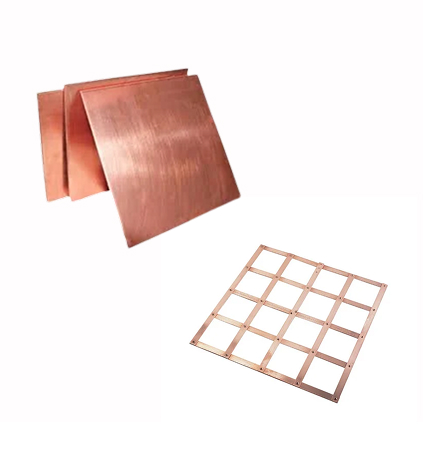
featueres
1. High Conductivity: Made of materials like GI (Galvanized Iron), copper, or copper-bonded steel for excellent conductivity.
2. Corrosion Resistance: Designed to withstand corrosive soil environments.
3. Flat Surface Area: Offers a larger surface area for better current dissipation.
4. Mechanical Strength: Strong and rigid structure ensures long life.
5. Custom Sizes: Available in various thicknesses and sizes depending on the application.
usage
1. Discharge of Fault Currents: Helps to dissipate fault or leakage currents safely to the earth.
2. Reference Potential: Maintains the potential of a system at ground level.
3. Lightning Protection: Works in coordination with lightning arrestors to provide a safe discharge path.
4. Safety: Protects human life and equipment by ensuring that stray voltages do not accumulate.

size and range
standardization
1. IS 3043 – Indian Standard for Earthing
2. IEEE 80 – Guide for Safety in AC Substation Grounding
3. IEC 60364 – Low-voltage electrical installations
4. BS EN 50522 – Earthing of power installations exceeding 1 kV AC
aPPLICATION

1. Power Substations
2. Industrial Plants
3. Telecom Towers
4. Data Centers
5. Residential and Commercial Buildings
6. Renewable Energy Plants (Solar/Wind Farms)
7. Lightning Protection Systems
8. Control Panels & Generators
INSTALLATION
1. Excavation: A pit is dug (typically 2–3 m deep) depending on soil conditions.
2. Placement: The earthing plate is installed vertically or horizontally.
3. Connection: Connected to earth conductors using brass clamps or welding.
4. Backfilling:
Pit is filled with a mixture of charcoal, salt, and soft earth to enhance conductivity.
5. Moisture Retention: A watering arrangement is often provided to maintain soil moisture.