ARMOUR RODS & PERFORMED FITTING
About The Product
A J-hook is a metal hook-shaped hardware used in power distribution for suspending or securing service drops, messengers, or secondary conductors. Sometimes called hook-bolt or J-bolt, it's designed to carry a load safely while retaining ease of installation.
These components are part of the broader family of conductor accessories, which include fittings used for vibration control, conductor repair, and mechanical reinforcement.
featueres
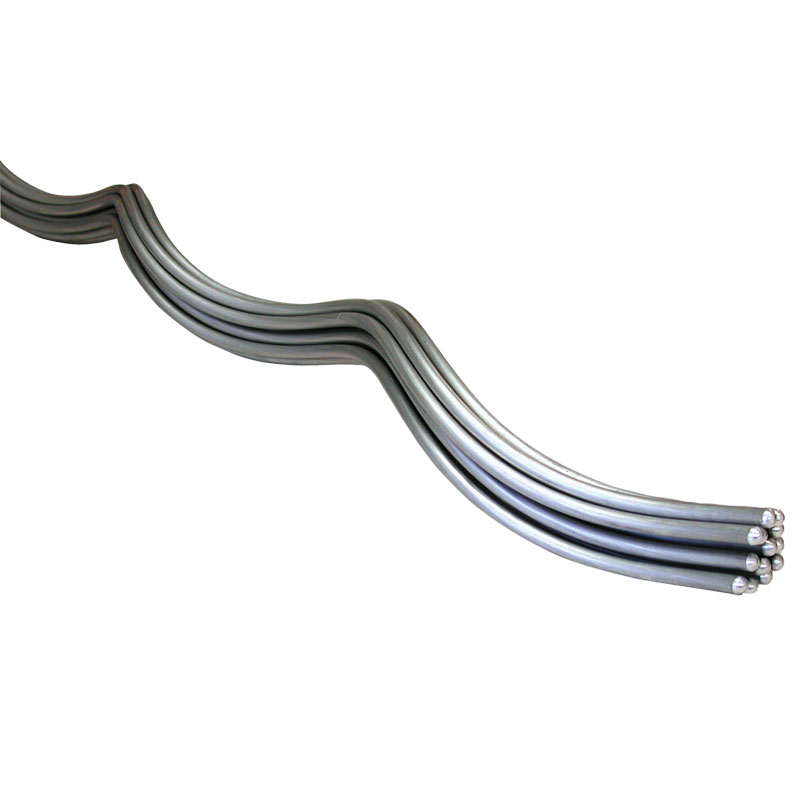
1. Pre-shaped (helical) design for fast and easy installation without the need for tools.
2. Corrosion-resistant materials such as aluminum-clad steel, galvanized steel, or aluminum alloy.
3. Designed for precise fit based on conductor size and type.
4. High mechanical strength and flexibility.
5. Excellent fatigue resistance and vibration damping.
usager
Armour Rods
1. Designed to protect conductors from abrasion, bending, and fatigue at points of support such as suspension or tension clamps.
2. Reduce stress concentration at the conductor clamp interface.
3. Provide a restorative action against conductor strand damage.
4. Help in dampening Aeolian vibration on conductors.
J-Hook:
1. Used for splicing, dead-ending, supporting, and repairing conductors.
2. Include dead-end grips, splices, suspension clamps, and more.
3. Designed to match the mechanical and electrical properties of the conductor.
application
Power Line Usage:
1. Transmission and distribution lines (typically 11kV up to 765kV).
2. Installed at suspension clamps, dead ends, tension joints, and cross-arms.
Common Locations:
1. At supports to protect against clamp damage.
2. At mid-span joints to restore mechanical strength.
3. On river crossings, mountain lines, and areas with high wind vibration.
Other Uses:
1. Used in railway electrification, communication lines, and fiber composite ground wires (OPGW).

size and range
standardization

1. IEEE C57.12.26 / C57.12.28 – Pad-mounted equipment interface standards
2. ANSI C119.4 – Electric connectors: test methods and performance requirements
3. NEMA CC1 – Electric connectors
4. UL 486A/B – Safety standard for wire connectors
5. IEC 61238-1 – Compression and mechanical connectors for power cables
6. ASTM B117 – Salt spray testing (corrosion resistance)
7. CSA C22.2 – Canadian standard for cable connectors
installation
➥Identify conductor type and size.
➥ Unpack the rods – they are usually color-coded or tagged.
➥Align the starting point of the rod to the marked application area.
➥Wrap helically around the conductor by hand, following the natural lay direction.
➥Ensure even spacing and tight grip.
➥ For preformed dead-ends or splices, align the fittings and use a mandrel or tool if specified.