
SPACER DAMPERS
About The Product
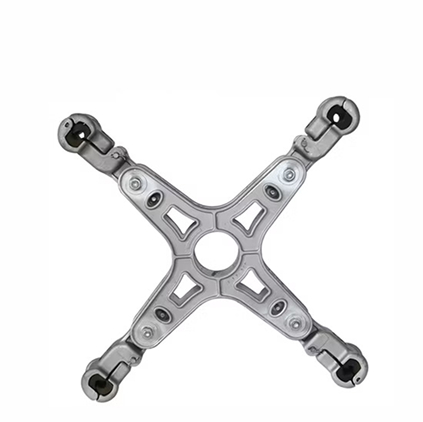
Spacer dampers are mechanical devices installed on bundled conductor systems in high-voltage overhead transmission lines. Their primary role is to maintain uniform spacing between sub-conductors and to suppress vibration and galloping caused by wind, thus ensuring the mechanical and electrical integrity of the line.
featueres
1. Corrosion-resistant materials: Typically made of aluminum alloy, galvanized steel, or composite materials.
2. Flexible damping elements: Often include elastomeric or neoprene bushings to absorb vibrations.
3. Resilient arm design: Allows limited movement and flexibility while maintaining conductor spacing.
4. Good clamping force: Ensures reliable attachment without damaging the conductor.
5. Weather resistance: Able to withstand harsh environmental conditions (UV, rain, wind, pollution).
usage
Spacer dampers serve two critical functions:
1. Spacing Function: They maintain a fixed distance between conductors in a bundle to prevent them from clashing.
2. Damping Function: They absorb and dissipate the energy from aeolian vibration (low-amplitude, high-frequency) and galloping (large-amplitude, low-frequency) vibrations caused by wind.
They are particularly used in:
1. Bundled conductor systems (2, 3, 4, or more conductors per phase)
2. Extra High Voltage (EHV) and Ultra High Voltage (UHV) transmission lines (220 kV and above)
size and range
Spacer dampers are available in different configurations based on:
1. Bundle configuration: Twin, triple, quad, or hex bundle
2. Conductor diameter: Typically ranging from 20 mm to 40 mm
3 .Spacing: Common spacings include 300 mm, 400 mm, 450 mm, 500 mm, and 600 mm between conductors
Types of Spacer Dampers:
1. Rigid Spacer Dampers: Fixed design, minimal damping—used in areas with minimal vibration
2. Flexible/Articulated Spacer Dampers: Include elastomeric joints for better damping
3. Interphase Spacer Dampers (IPS): Used to maintain spacing between phases in narrow right-of-way corridors or for crossing lines
standardization
1. IEC 61854 – Spacer-dampers for overhead lines
2. IEEE 664 – Overhead transmission line spacers
3. ASTM B117 / B211 – Material standards for aluminum alloys
4. ISO 9001 – Quality management systems for manufacturers
application
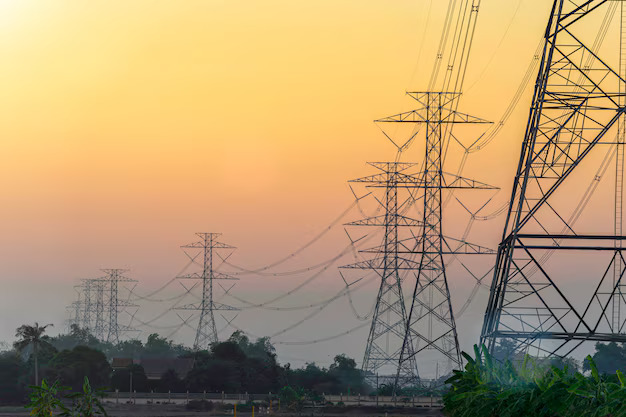
1. High-voltage transmission lines (220 kV to 1200 kV)
2. Bundled conductor systems eEspecially in long-span crossings, river crossings, mountainous terrain
3. Regions prone to high wind and vibration
4. Compact line corridors requiring precise conductor management
installation
➥ Mounting: Installed manually or with the help of aerial devices (helicopters, drones, or line trollies)
➥ Positioning: Typically installed at regular intervals (e.g., 60 m to 100 m) along the span depending on span length and vibration profile
➥ Torque control: Bolts are tightened to specified torque to ensure secure fitting without damaging the conductor
➥ Inspection: Post-installation inspection is required to ensure alignment and spacing integrity