
suspension clamp
About The Product
A Vibration Damper is a critical mechanical device used in overhead power transmission and communication lines to reduce Aeolian vibration caused by wind. These vibrations, if uncontrolled, can cause fatigue damage to conductors, ground wires, or optical ground wires (OPGW), eventually leading to mechanical failure or decreased life span of the line.
Vibration dampers are installed at specific intervals along the conductor or cable, typically near suspension or tension hardware, where the amplitude of vibration is highest.
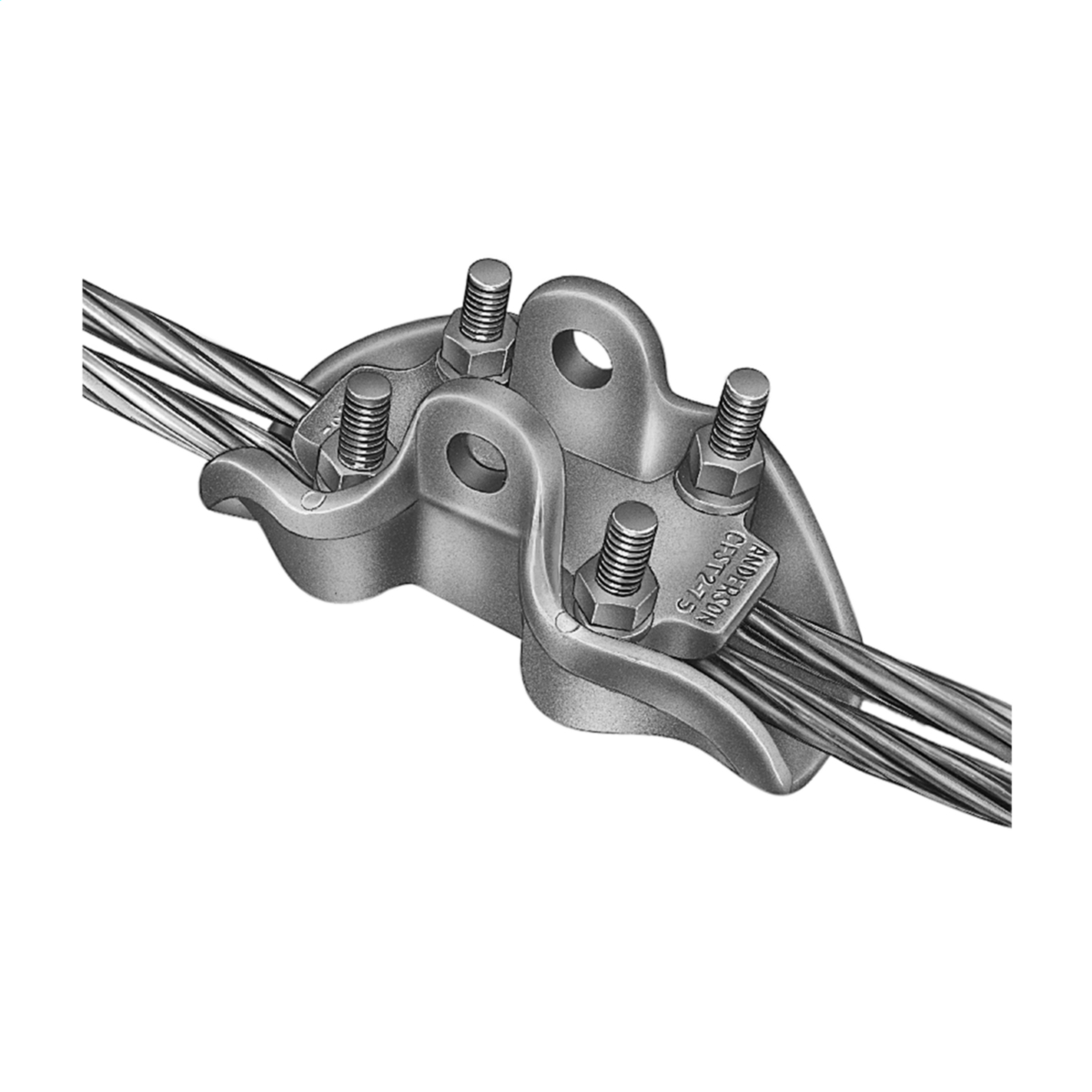
features
1. Material: High-strength galvanized steel, aluminum alloy (heat-resistant), or ductile iron.
2. Corrosion Resistance Hot-dip galvanized or anodized aluminum for long life in outdoor environments.
3. Design: Can be single-bolt, double-bolt, or trunnion type for different mechanical requirements.
4. Conductor Protection: Includes neoprene or rubber inserts (in insulated lines) to avoid damage.
5. Load Capacity: Designed for working loads from 5 kN to 70 kN or more depending on model.
6. Electrical Isolation: Maintains electrical continuity or isolation depending on application.
Usage
1. Controls Aeolian vibration caused by low-speed wind (0.5–7 m/s).
2. Prevents fatigue failure of conductor strands and accessories.
3. Protects fiber optic cores in OPGW/ADSS cables.
4. Installed close to suspension clamps, dead-ends, and spans exceeding 100 meters.
5. Works in tandem with armor rods and spacers when needed.

size and range
standardization
1. IEC 61284: Overhead lines – Requirements for fittings.
2. EN 50483-3: For ABC accessories (low-voltage systems)
3. ASTM A153: Zinc Coating for Corrosion Protection
4. IS 398 / IS 5561 (India): Overhead line hardware
5. IEEE C119.4: Connectors and clamps for aluminum and copper conductors
6. NFC 33-040 / NFC 33-209: French standard for LV ABC fittings
Application

1. Urban & Rural Electrification Projects
2. Overhead Transmission and Distribution Lines (LV/MV/HV)
3. Railway Electrification
4. Renewable Power Projects (e.g., Wind & Solar farm transmission)
5. Telecommunication – Suspension of fiber optic cables
6. Coastal & Industrial Environments – With special anti-corrosion coatings
Installation
A. General Guidelines:
1. Verify compatibility of the clamp with the conductor size.
2. Inspect all parts of the clamp before installation.
3. Ensure all hardware (bolts, washers, nuts) are present and rust-free.
B. Installation Steps
1. Prepare Pole: Attach a bracket or hook onto the pole.
2. Open the Clamp Body: Most clamps have a hinged body or bolt system.
3. Insert the Cable: Place the conductor or cable in the groove of the clamp.
4. Secure the Clamp: Tighten the bolts or snap the body shut depending on the model.
5. Fix to Bracket: Attach the clamp’s eye or hook to the pole bracket.
6. Final Check: Ensure the cable is securely held and not under tension at the clamp point.
C. Safety Tips:
1. Use insulated tools when working on live or energized lines.
2. Do not overtighten bolts to avoid crushing the conductor.
3. Follow all local electrical codes and standards during installation.