
CLAMPS & CONNECTORS
About The Product
Clamps and connectors are critical electrical hardware components used to establish secure mechanical and electrical connections in overhead lines, substations, and electrical panels. These components ensure proper transmission of electrical current while maintaining mechanical strength and corrosion resistance.
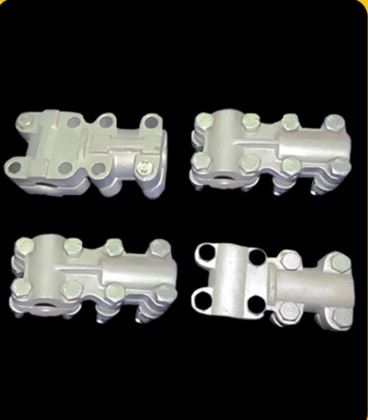
features
1. Material:
Aluminium alloy, copper, galvanized steel, brass
2. Corrosion Resistant:
Hot-dip galvanized / tin-plated / anodized finishes
3. High Conductivity:
Designed to minimize contact resistance
4. Mechanical Strength:
Withstands vibration, tension, and environmental stress
5. Thermal Stability:
Withstands temperature fluctuations due to high current or weather
6. Compatibility:
Available for round, sector, stranded, or 7. solid conductors,br>
7. Tool-Free Options: Some compression/tap connectors are tool-less or crimp-based
usage
1. Power transmission lines (HT & LT)
2. Distribution networks
3. Switchyards & substations
4. Earthing and lightning protection systems

Size and range
application
1.Overhead Lines
Suspension clamps, tension clamps, PG clamps, dead-end clamps
2. Substations
Busbar connectors, T-clamps, flexible connectors
3.Earthing Systems
Earth rod clamps, U-bolt connectors
4.Industrial Panels
Mechanical lugs, terminal connectors
5.Tap-offs and Jumpers
PG clamps, piercing connectors, bi-metal connectors
installation
Tools Required:
1. Torque wrench
2. Spanner set
3. Compression tool / hydraulic crimper
General Steps:
1. Clean conductor surfaces to remove oxidation.
2.Align conductor properly inside the clamp or connector groove.
3.Tighten bolts uniformly (in sequence) to recommended torque.
4.For compression types, crimp using approved die pattern.
5.Apply joint compound (for bi-metallic connections) to prevent galvanic.