
POLE CLAMPS
About The Product
Pole Clamps are mechanical fasteners designed to attach or secure various equipment and accessories to utility poles—typically used in electrical, telecommunication, and power distribution systems. They ensure safe and firm mounting of cables, conductors, cross arms, insulators, and other fittings to concrete, wooden, or steel poles.
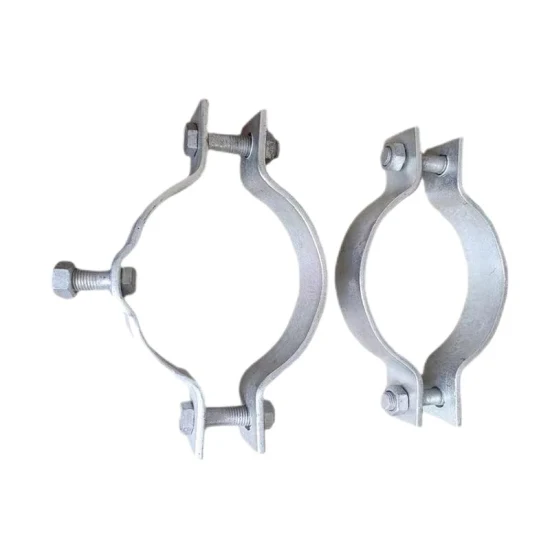
featueres
1. High Strength & Durability: Made from galvanized steel, stainless steel, aluminum, or ductile iron to withstand outdoor conditions.
2. Corrosion Resistance: Hot-dip galvanizing or powder coating ensures long life, even in harsh weather environments.
3. Adjustable Design: Many clamps are designed with adjustable bolts or straps to accommodate different pole diameters.
4. Ease of Installation: Simple bolted or banded fastening allows for quick field assembly.
5. Load-bearing Capability: Engineered to carry mechanical loads from conductors, stays, or brackets.
usage
1. Supporting stay wires or guy wires.
2. Fixing cross arms, brackets, or fittings on poles.
3. Holding electrical cables, optical fiber, or communication lines.
4. Stabilizing poles with additional bracing or equipment.
5. Serving as grounding points in earthing systems.

size and range
standardization
1. IEC 61952, IEC 61284 – General requirements for insulators and fittings.
2. ASTM A153 / A123 – Galvanization standards.
3. IS 2486 (India) – Hardware fittings for overhead power lines.
4. BS EN ISO 1461 – Zinc coatings for corrosion protection.
aPPLICATION

1. Electrical Utility Networks: For 11kV to 400kV overhead transmission lines.
2. Telecommunications: Mounting fiber optics and coaxial cables.
3. Street Lighting: Supporting lighting brackets on poles.br>4. Railway Electrification: Holding catenary wires or transmission lines.
5. Wind and Solar Farms: Fixing components to support poles or towers.
6. Industrial Plants: Structural support in substations or outdoor distribution areas.
INSTALLATION
1.Preparation: Identify pole diameter and location for the clamp.
2. Positioning: Place clamp around the pole or bolt through pre-drilled holes.
3. Fastening: Secure using nuts/bolts or banding tools.
4. Load Application: Attach cables, stays, or fittings as required.
5. Inspection: Ensure tightness and alignment for safety compliance.