
isolator CLAMPS
About The Product
Isolator Clamps are mechanical hardware components used in high-voltage electrical systems to connect isolators (disconnect switches) to busbars, conductors, or terminals. They ensure a rigid, conductive, and secure mechanical connection that allows isolators to operate safely without energy loss or mechanical failure.
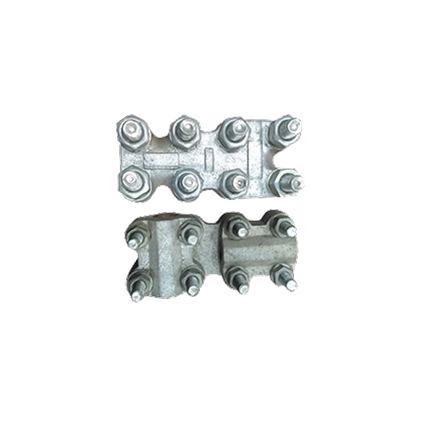
featueres
1. High Conductivity: Made from aluminum alloy, copper alloy, or bimetal (for aluminum-to-copper transitions) to reduce resistive losses.
2. Corrosion Resistant: Usually hot-dip galvanized or anodized to prevent rust and chemical degradation.
3. Mechanical Strength: Engineered to bear high mechanical and dynamic stresses caused by switching operations or wind loads.
4. Thermal Stability: Withstands high temperatures during overload or short circuit conditions.
5. Easy to Install & Replace: Designed for straightforward clamping without requiring welding or permanent fixtures.
usage
1. Connecting conductors to isolator terminals or arms.
2. Ensuring secure contact between the isolator blade and the fixed contact.
3. Serving as interface fittings between isolators and other components such as jumpers, terminals, or busbars.
4. Maintaining electrical continuity and mechanical stability in substations or switchyards.

size and range
standardization
1. IEC 62271-102: High-voltage switchgear and control gear – Alternating current disconnectors and earthing switches.
2. IS 9921 (Part 1 to 5): Indian Standard for AC isolators/disconnectors.
3. IEEE C37.30 / ANSI C119 Series
4. ASTM B108/B179 (Material specs for aluminum alloys)
5. IS 5561: Terminal connectors for power lines above 33kV
aPPLICATION

1. Substations – To connect busbars, jumpers, or terminals to isolators.
2. Transmission Line Structures – For conductor anchoring at isolator terminals.
3. Railway Electrification – As part of isolating switches in OHE systems.
4. Switchyards – Ensuring high-quality electrical connectivity and mechanical strength at disconnection points.
INSTALLATION
➥ Inspect components for corrosion, alignment, and size compatibility.
➥ Align clamp with isolator terminal or busbar.
➥ Insert conductor and tighten bolts to specified torque value.
➥ Ensure even contact pressure on all surfaces.
➥ Check conductivity and mechanical security post-installation.